
Are the IFA’s economic expectations reaching you? A new review has answers
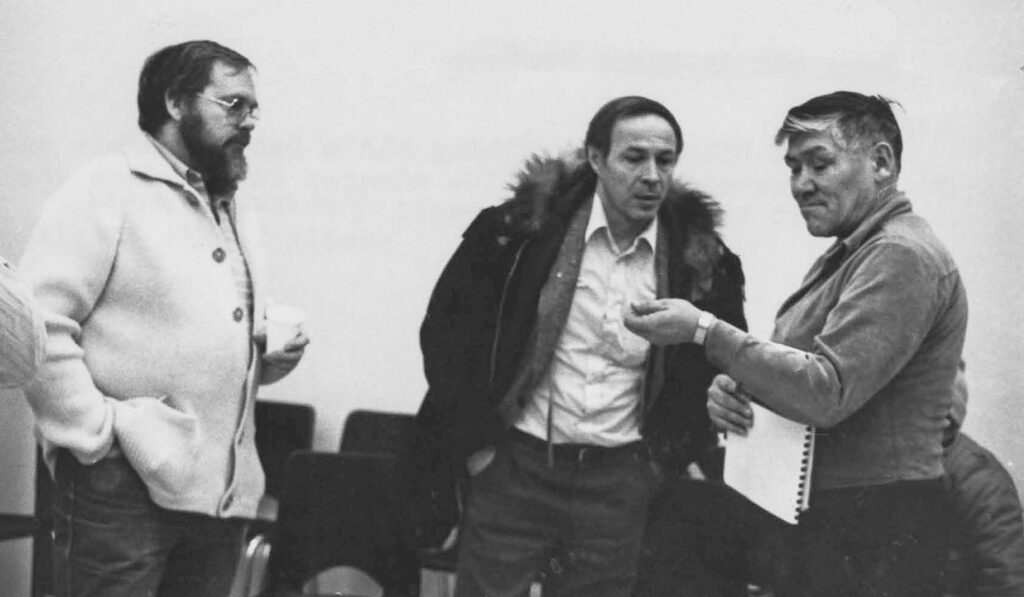
When the Inuvialuit Final Agreement was signed in 1984, COPE negotiators wrote an expectation into Section 16: Inuvialuit would take part fully in the northern economy and build a strong, self-reliant economic base for future generations.
Forty years later, how close are we?
The IFA Economic Measures Review (December 2024) is the first in-depth look at that question since 2001. It examines the economic health of the Inuvialuit Settlement Region, what IRC and governments have invested and whether Section 16’s objectives are being met.
The short answer: not yet.
Progress, but not for everyone
The review found real gains. Education levels improved in every ISR community, and high school graduation rates rose from about 50% in 2001 to about 62% in 2021. Typical incomes are up, even after inflation. More ISR businesses are ready to compete for contracts, and arts and crafts, tourism and construction are opening new doors.
But those gains haven’t reached everyone equally. People interviewed for the review described a “two-tiered” system, in which some beneficiaries and businesses are thriving while others still face barriers to jobs, housing, health, education, language and culture.
Poverty remains high, communities are worried about substance use, housing shortages and affordability, young people often leave home for school and work and climate change, COVID-19 and boom-and-bust cycles have taken a toll.
The numbers tell part of the story
In 2021, among Inuvialuit living in the ISR:
- Median income was $33,200, compared with $84,000 for non-Indigenous residents
- 30.7% of Inuit households lived in homes needing major repairs
- 10.7% reported an Inuit language as their mother tongue
- Hunting, fishing and Inuit language use have declined
And while ISR businesses won $146.8 million in federal contracts between 2009 and 2021, beneficiary-owned businesses received less than a third of that value.
What happens now
The review calls on all IFA parties (IRC, Canada, the Northwest Territories and Yukon) to commit to sustained, long-term investment, better-coordinated programs and stronger relationships. IRC will keep holding governments and the Inuvialuit corporate group accountable to the IFA, so its benefits reach every community and every beneficiary.
The review also calls for better data, because what gets measured gets addressed.
This is your agreement. Know what it says about you.
These findings are about your family, your community and your future. They’ll shape the conversations IRC has with government partners in the years ahead, and beneficiaries who know the facts are the strongest voice in that conversation.
Read the plain-language summary to see the full picture in a few minutes.
Check the FAQs for answers to common questions.
Share this post with family and friends so every beneficiary knows where things stand.
This summary is based on the December 2024 IFA Economic Measures Review. It doesn’t replace the full report or the IFA and is not legal advice.